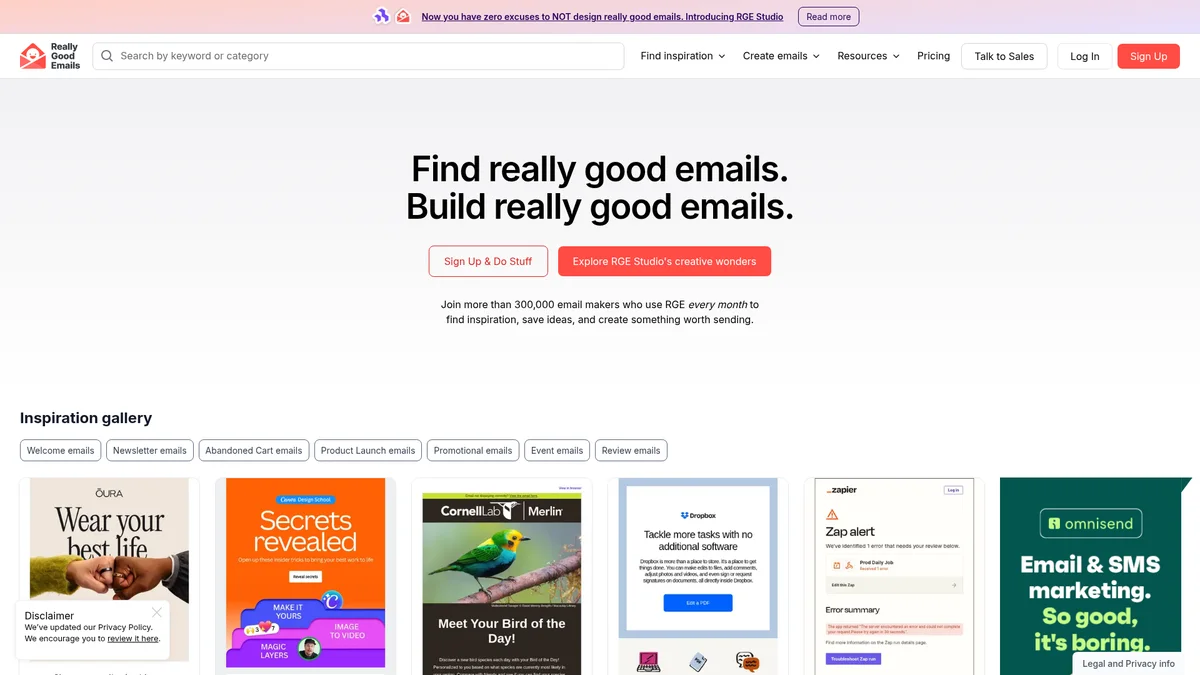

Find email design inspiration organized around welcome messages, launches, newsletters, and lifecycle moments.
EmailsExplore
Choose email inspiration by the job the message needs to do, not just the visual style.
A welcome email, an abandoned-cart reminder, a product announcement, and a newsletter answer different questions. Start with the recipient’s context and the next action the message should support.
Study the subject, opening, information hierarchy, proof, and primary action. Email Love, Really Good Emails, Milled, and other archives give you different ways to explore those choices.
If the message belongs to onboarding or a post-purchase journey, the surrounding emails matter. Record the trigger, delay, and purpose of each step. A beautiful isolated message may be a poor fit for the customer’s actual stage.
Ask your agent to compare three examples for the same lifecycle job. Have it explain the structural choices, then draft original versions in your brand voice. Do not import unsupported claims, discounts, or product details from the reference.
Find email design inspiration organized around welcome messages, launches, newsletters, and lifecycle moments.
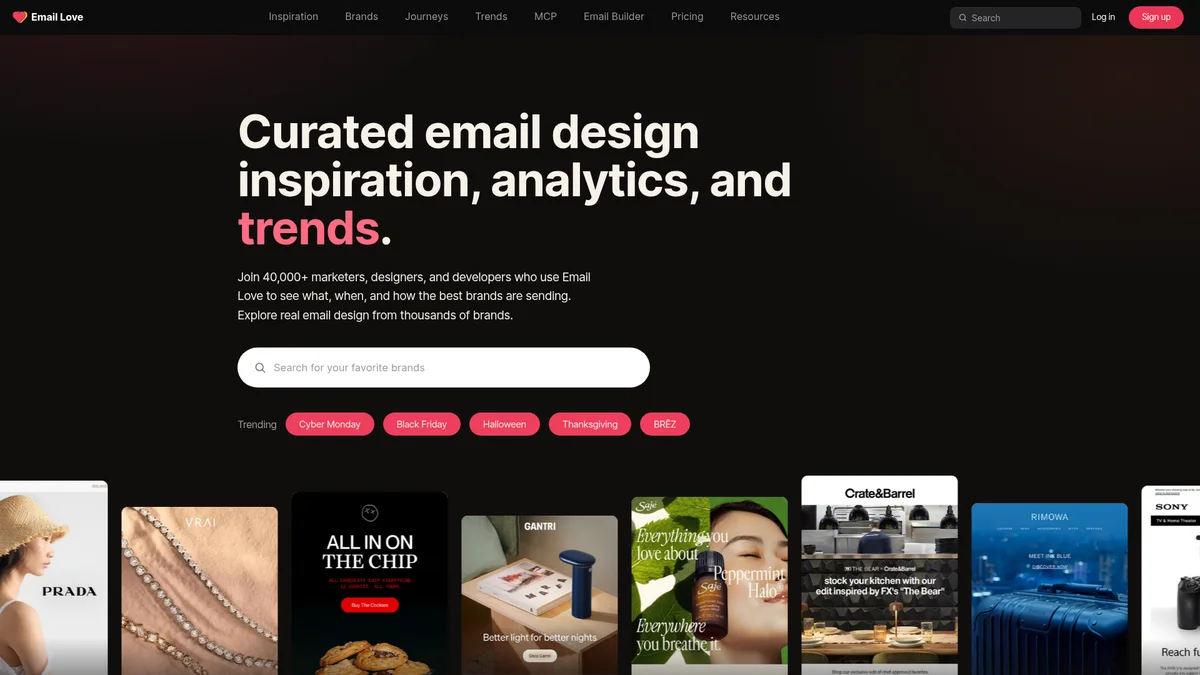
Study brand emails, campaign journeys, and email design references across ecommerce and other industries.
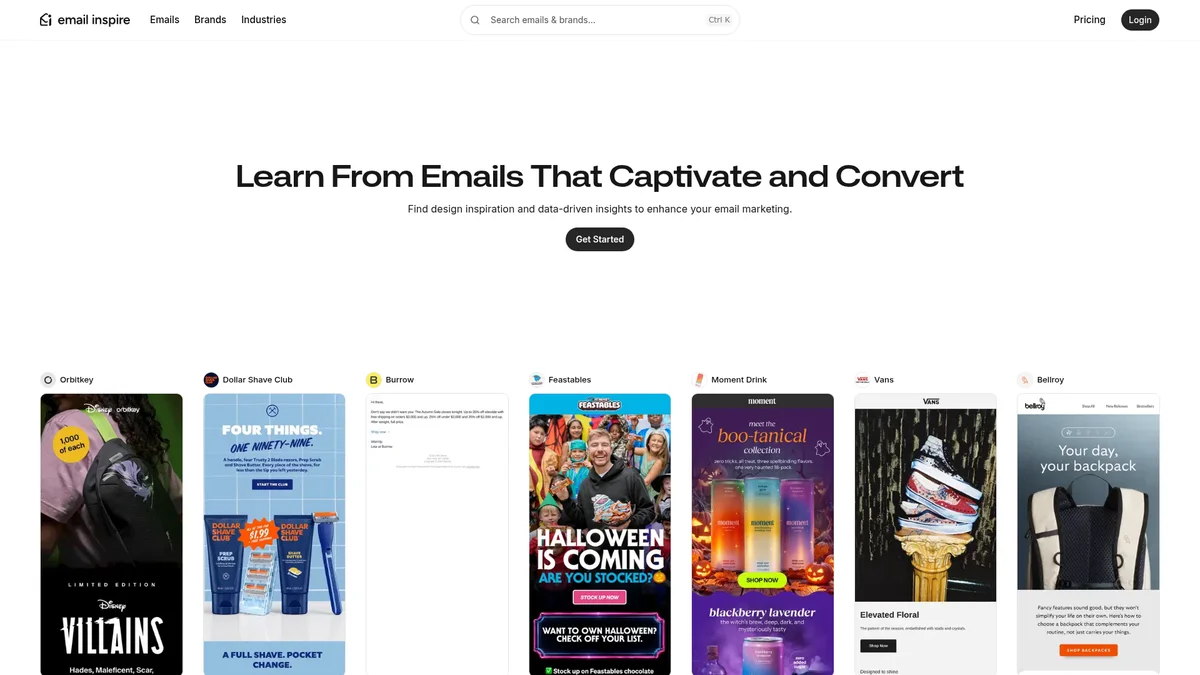
Explore brand email campaigns and design references to plan your next message with better context.

