MCP subscription
$29/month or $69/quarter- Agent access to the iOS interaction library
- Documented client setup and related skills
License-key sign-in is required for the documented ChatGPT connection.
 Motion-reference library
Study motion and interaction references to describe how an interface should behave over time.
Public page reviewed · 2026-10-21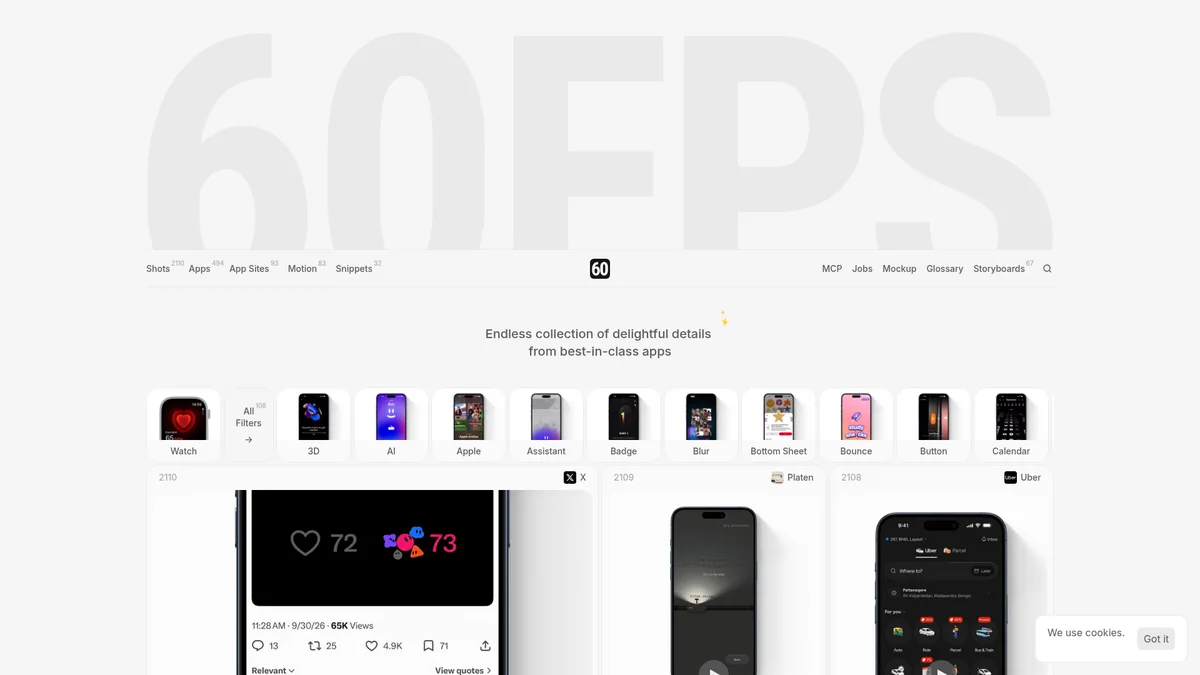
Describe the trigger, movement, duration, and final state. Include a reduced-motion alternative when carrying the idea into a product interface.
Browse creative references. Study motion and interaction references to describe how an interface should behave over time.
Check the vendor for account, plan, permissions and usage limits.
Official documentationDocumented connections have not been authenticated or tested by this directory. “Not established” means we do not have enough evidence, rather than that a feature is unavailable.
MCP access is listed at $29/month or $69/quarter per seat. The ChatGPT connection requires the user's license key.
License-key sign-in is required for the documented ChatGPT connection.
Add your brand and goal, then paste this into your preferred agent.
Study the choices that make an example useful: its structure, visual hierarchy, opening, and next action. Adapt the pattern to your actual product and audience. The original creator's assets, wording, claims, and identity stay with them.